Team-building activities are often perceived as isolated events designed to break the monotony of work. However, when integrated with wellness programs, these activities take on a strategic role in enhancing employee well-being, fostering engagement, and building a culture of collective health. In this blog, we’ll explore various innovative team-building strategies that can be incorporated into wellness programs to create a more holistic approach to work and a more engaged workforce.
Understanding the Importance of Team-Building in Wellness Programs
Traditionally, wellness programs focus on individual health metrics such as fitness, mental well-being, and stress management. However, team-building offers an often underutilized approach to promoting well-being. When employees collaborate on wellness goals, they build social connections, improve communication, and support one another in ways that drive long-term engagement.
Why Team-Building Matters for Wellness
The foundation of wellness is not just individual responsibility but creating a culture of collective care. Team-building activities reinforce this by fostering shared accountability, breaking down silos, and building camaraderie, all of which are essential for both mental and emotional health.
Example: One healthcare company found that while employees were diligent about attending wellness seminars and workshops, they still lacked engagement when it came to collective health goals. By introducing team-building exercises such as group activity challenges and wellness retreats, they saw a dramatic increase in participation and camaraderie. This, in turn, improved the overall effectiveness of their wellness programs.
The Power of Social Support in Wellness
Research has long shown that social support is one of the key factors in maintaining both physical and mental health. Team-building strategies can create these networks of support. Whether it’s through collaborative problem-solving, shared physical challenges, or even wellness-based competitions, employees become more invested in the process because they are doing it together.
Anecdote: Take the example of “Walk the World,” an initiative by a multinational technology company. This global walking challenge encouraged teams across different locations to walk the equivalent distance of circumnavigating the globe. The challenge wasn’t just about steps; it was about working together, sharing progress, and encouraging each other through team WhatsApp groups and internal platforms. This sense of shared accomplishment kept employees motivated, resulting in healthier habits and stronger personal bonds.
Team-Building Strategies for Wellness Programs
The following strategies are some examples of how to integrate team-building principles into wellness programs to promote sustained participation, well-being, and organizational commitment.
- Wellness Challenges with Team Goals
Incorporating competitive yet collaborative wellness challenges can boost engagement levels significantly. Instead of focusing solely on individual solo metrics, create challenges that require teams to work together to achieve collective goals. This also increases a sense of social cohesion and group membership.
Strategy Example: Imagine a month-long “Healthy Habits” challenge where employees form teams and earn points for daily habits such as drinking water, exercising, or taking stretch and/or meditation breaks. Teams track progress on a shared platform, with weekly updates on the leaderboard. This type of challenge not only creates accountability but also a sense of camaraderie as participants cheer each other on.
Discussion: These challenges can be powerful motivators because they blend personal achievement with collective or group contribution to success. Employees feel a responsibility not just to themselves but to their team, making it less likely they’ll drop out of the wellness program prematurely.
- Wellness Workshops with Team Problem-Solving
Organize wellness workshops where employees are encouraged to brainstorm and solve common health and wellness challenges as a team. These can include sessions on managing stress, balancing work-life, starting a community garden., performing a community work project or adopting healthy eating habits.
Strategy Example: An insurance firm introduced “Wellness Innovation Days,” where cross-departmental teams were tasked with designing wellness strategies for the company. Teams competed to pitch the best ideas, such as mental health initiatives or ergonomic office solutions, to the leadership team. The winning ideas were then integrated into the company’s broader wellness programs and made highly visible to all employees.
Anecdote: One team came up with the idea of creating “Zen Zones,” which are quiet, relaxing spaces within the office where employees could take quick, five-minute breaks to decompress. The idea was so well-received that it became a staple across all office locations, promoting mental well-being through a collaborative team-building effort.
- Group Physical Activities and Sports Events
Encouraging group activities, such as company-wide walking events, running clubs, or even inter-departmental sports tournaments, is another way to integrate wellness with innovative team-building. Group fitness or sports initiatives can break down barriers between departments and improve the overall social fabric of the company.
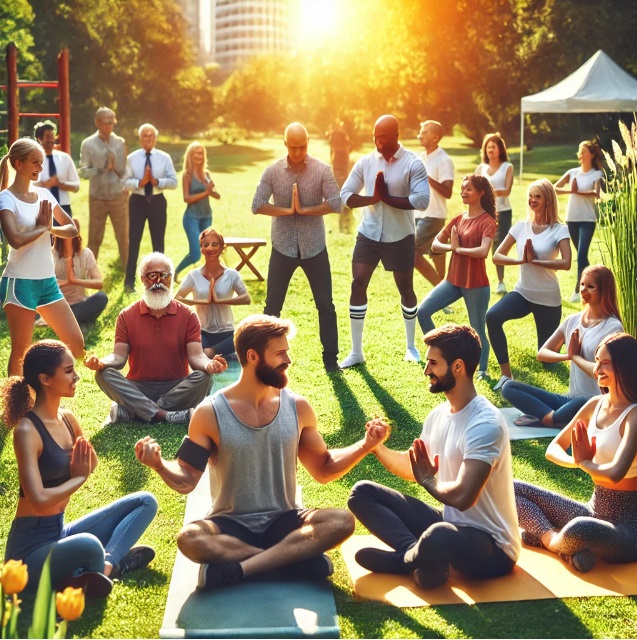
Strategy Example: A leading financial institution launched “Wellness Wednesdays,” where employees across the company participated in an outdoor boot camp or conditioning session before the workday started. This initiative allowed employees to bond over a shared physical experience, while also starting their day on a healthy note.
Discussion: Physical team-building activities serve dual purposes. They help employees improve their health: relieve stress, improve fitness, and boost morale and they can contribute to the social or group cohesion aspect of wellness by fostering collaboration in a non-work-related setting.
- Mindfulness and Mental Health Initiatives
The modern workplace is often a high-stress environment, and this stress can undermine even the most well-designed wellness programs. Introducing mindfulness-based team-building exercises can help employees manage stress together, promoting a collective mental well-being culture.
Strategy Example: A tech startup developed “Mindful Mondays,” where teams gathered for a 20-minute group meditation session followed by a discussion on stressors and ways to cope. These sessions provided a sense of emotional support and fostered a sense of shared understanding, creating a mentally healthier workplace culture.
Anecdote: During one session, an employee opened up about feeling burnt out, and the team brainstormed solutions, such as workload redistribution and more frequent stretch breaks. The vulnerability shared in that moment allowed for a greater sense of empathy and reinforced a culture of mutual support.
Overcoming Challenges in Integrating Team-Building and Wellness
While team-building can enhance wellness programs, there are potential challenges that organizations need to address to ensure success.
- Balancing Individual and Team Contributions
Not all employees will have the same physical abilities or wellness needs, and that can create an imbalance in participation. It’s important to create team-building activities that allow for a range of physical challenge and individual flexibility while still promoting a collective sense of engagement.
Strategy Example: Offer tiered levels of challenges within team-based wellness activities. For example, a “Fitness Friday” event could offer different levels of activities such as a 5k run, a leisurely walk, or a chair massage session, so all employees feel comfortable participating while still contributing to their team.
- Encouraging Guilt-Free Participation
Some employees might feel excluded from team-building wellness initiatives if they have physical limitations, social anxiety, or simply don’t enjoy traditional group wellness activities. Ensuring that wellness programs are guilt-free is crucial for maximizing participation and building an authentic sense of community.
Discussion: guilt-free can be achieved by offering a range of activities, from low-impact fitness to mental health-oriented workshops. The goal should be to meet employees where they are in their wellness journey and to create an environment where every contribution, whether small or large, is valued.
Measuring Success in Wellness Team-Building Initiatives
A successful wellness program is not just about initial participation but about sustained engagement and long-term outcomes. Measuring the success of team-building initiatives within wellness programs requires a combination of quantitative and qualitative metrics.
- Tracking Participation and Engagement
Monitor how many employees participate in wellness activities and, more importantly, how consistently they participate over time. Employee surveys can provide insights into how team-building elements contribute to sustained involvement.
- Employee Satisfaction and Feedback
Team-building can dramatically affect the way employees feel about their wellness program. Regular feedback surveys, focus groups, and one-on-one check-ins can help gauge employee satisfaction with both the team-building and wellness components.
- Health Outcomes
Over time, companies should track key health metrics such as reductions in absenteeism, improvements in health measures from screenings, mental health, and reduced stress levels. These outcomes can be tied back to the wellness initiatives and team-building strategies, providing data to refine and expand programs.
Conclusion: Building a Healthier, More Connected Workforce
Innovative team-building strategies can take wellness programs from good to great by fostering a sense of community, increasing engagement, and promoting long-term health outcomes. By creating wellness programs that not only focus on individual well-being but also on collective success, companies can create a more connected, supportive, and healthier workforce.
When wellness becomes a team effort, everyone wins. Whether through wellness challenges, collaborative workshops, or physical activities, employees are more likely to thrive in an environment that supports both their individual and collective well-being.