
Introduction: You can’t out-sleep a late dinner
If you’ve ever tossed and turned after a heavy 10 p.m. meal—or felt strangely wired after a 4 p.m. latte—you’ve experienced the tight feedback loop between what and when you eat and how you sleep. Sleep and nutrition are both powerful levers for health on their own. But together—through hormones, body temperature, digestion, and the circadian clock—they can either supercharge recovery or quietly sabotage it.
This guide distills what the research says about meal timing, composition, and smart pre-bed routines. Along the way, you’ll meet real-world personas (an endurance runner prepping for a half-marathon and a rotating-shift nurse) and walk away with practical timelines, snack ideas, and a 7-day reset you can actually follow.
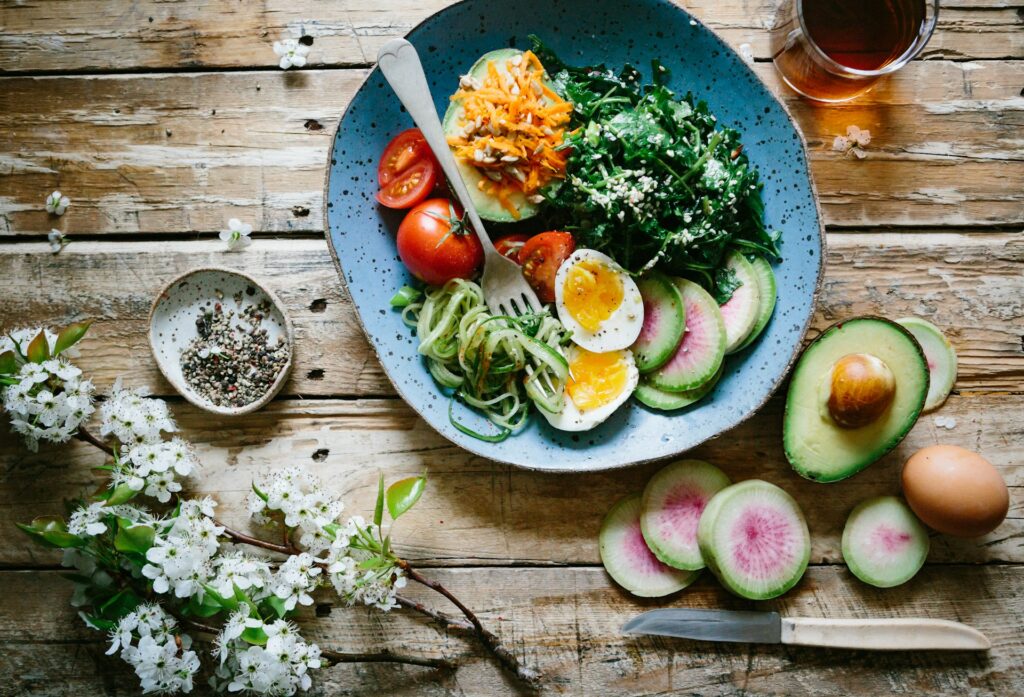
Photo by Brooke Lark on Unsplash
The circadian “why”: Your body keeps time—and food resets the clocks
Your brain’s master clock (in the suprachiasmatic nucleus) syncs mostly to light, while “peripheral clocks” in organs like the liver, pancreas, and gut sync strongly to food timing. Eating late pushes these peripheral clocks out of step with the brain’s clock, a state called circadian misalignment. In tightly controlled lab studies, misalignment reduces glucose tolerance and insulin sensitivity, meaning the same dinner can lead to higher blood sugar in the evening than in the morning—even when you sleep the same amount.
A 2022 randomized crossover trial adds another layer: late eating (same calories, just later) increased hunger, reduced energy expenditure, and shifted fat-tissue pathways that favor storage—under identical sleep, light, and activity conditions. Meal timing alone changed metabolism.
So what? If you train after work, run night shifts, or simply dine late, your metabolism is different than it is earlier in the day. Aligning meals earlier tends to support steadier energy, better glycemic control, and, as you’ll see next, better sleep.
How meal timing and composition shape your sleep architecture
1) Carbs and sleep onset: earlier beats later
A classic experiment tested high- vs. low-glycemic meals eaten four hours vs. one hour before bed. High-GI meals eaten four hours before bedtime cut sleep-onset latency nearly in half compared with low-GI meals—and worked better than eating the same meal just one hour before lights-out. Translation: if you use carbs to fall asleep faster, time them earlier in the evening.
2) Fat, fiber, and sleep quality
Diet quality across the day matters. Controlled feeding research links higher saturated fat and sugar with lighter, more fragmented sleep, while higher fiber predicts more deep (slow-wave) sleep. Even one day of a lower-fiber, higher-saturated-fat pattern can degrade that night’s sleep.
3) Reflux risk and nighttime awakenings
Large or late meals increase gastric volume and reflux risk, fragmenting sleep with micro-arousals. The American College of Gastroenterology advises avoiding meals within 2–3 hours of bedtime and elevating the head of the bed for nocturnal symptoms. This is sleep hygiene with a clinical backbone.
The big three disruptors: caffeine, alcohol, and heavy late meals
Caffeine: the stealth sleep thief
A controlled trial gave participants 400 mg of caffeine either 0, 3, or 6 hours before their usual bedtime. All three conditions reduced total sleep time; even the 6-hour dose measurably disrupted sleep. For most people, a safe cutoff is at least six hours before lights-out.
Coach’s note: Highly sensitive sleepers may need a longer buffer, and caffeine can linger longer in the system with oral contraceptives, pregnancy, or certain genetic variants.
Alcohol: drowsy now, fragmented later
Alcohol can help you nod off faster and consolidates the first half of sleep, but it shifts and suppresses REM and drives more awakenings later in the night—net negative for restoration and memory. The higher the dose, the worse the second-half sleep rebound. For recovery, stop alcohol at least 3–4 hours before bed (or skip it).
Heavy or spicy dinners: warmth and wakefulness
Thermogenesis from large, high-fat, or spicy meals raises core temperature just when your body wants to cool down for sleep. Combine that with reflux risk, and late heavy dinners are a double-whammy. The fix is simple: lighter, earlier evening meals, with a small, easy-to-digest snack only if needed.
Pre-sleep protein: a legit recovery strategy (done right)
For athletes and active adults, protein before bed can support recovery without harming sleep when portions are reasonable. Modern trials show ~20–40 g of milk proteins (casein or whey) before sleep elevates overnight muscle protein synthesis—supporting both myofibrillar and mitochondrial adaptations after training. Newer work suggests whey and casein perform similarly overnight.
How to do it well
- Choose easily digested options: Greek yogurt, cottage cheese, or a small protein shake.
- Keep it light (skip large mixed meals).
- If reflux is an issue, finish the protein earlier (e.g., 2+ hours pre-bed) or switch to a lower-fat option.
Smart hydration: avoid the 2 a.m. bathroom break
Waking to pee (nocturia) fragments sleep and is often behavior-modifiable. Sleep medicine sources recommend hydrating earlier in the day and limiting fluids in the two hours before bed, particularly alcohol and caffeine. Empty your bladder before lights-out. If nocturia is frequent (≥2 times/night), talk to your clinician to rule out underlying issues.
Evidence-based bedtime snacks (and what to skip)
- High-GI carbs (timed earlier): When eaten ~4 hours before bed, they may shorten the time it takes to fall asleep. (Avoid within the last hour.)
- Tart cherry juice: Montmorency tart cherries (grown in Michigan) modestly increase melatonin intake and have been linked with longer sleep duration in small RCTs.
- Bananas: A classic U.S. bedtime snack; they provide magnesium and tryptophan precursors that may support relaxation.
- Kiwifruit: Still worth mentioning, but frame it as an “evidence-backed but less common” option.
- Glycine (3 g supplement): Taken ~1 hour before bed, has shown improvements in subjective sleep quality.
Skip near bedtime
- Big, fatty, or spicy meals (reflux/thermogenesis).
- Caffeine within 6–8 hours.
- Alcohol within 3–4 hours.
Real-world playbooks
1. Evening athlete (e.g., 7:00 p.m. workout)
Goal: Sleep well and recover.
- 12:30–1:00 p.m. (Lunch): Balanced plate with fiber, lean protein, and healthy fats.
- 5:00 p.m. (Pre-workout fuel): Peanut butter with apple slices or a granola bar.
- 8:15 p.m. (Post-workout): Light recovery meal: grilled chicken with rice and vegetables.
- 9:30–10:00 p.m.: If still hungry, Greek yogurt with berries or a small protein shake.
- All evening: No caffeine after 3–4 p.m.; avoid alcohol. Taper fluids after 8:30 p.m.
2. Rotating-shift nurse (11:00 p.m.–7:00 a.m.)
Goal: Limit circadian damage, preserve sleep.
- Anchor routine on days off: Keep one anchor sleep and anchor meals in daylight hours when possible.
- On night shifts: Eat daytime meals (breakfast, lunch, dinner), then pack a light snack for the night shift. Example: turkey sandwich with Greek yogurt.
- Caffeine: Use early in the shift only; cut off ≥6 hours before planned sleep.
- Wind-down: Fan or white noise machine, blackout curtains, cool temperature.
The timing sweet spot: An “early-eating” nudge
Several human trials suggest front-loading calories and moving your last significant meal earlier (sometimes called early time-restricted feeding) improves metabolic markers—even without weight loss. People report less appetite, better insulin sensitivity, and healthier blood pressure with daytime-restricted eating windows.
A practical target
- Last substantial meal: 2.5–4 hours before bed.
- If hungry later: Keep it small, protein-rich, and light.
Myth-busting: “Eating after 8 p.m. makes you gain weight”
Total daily energy balance and diet quality drive weight change most. But timing still matters for how your body handles those calories. Eating later—in your biological evening—tends to increase hunger, reduce energy expenditure, and impair glucose tolerance, all of which nudge weight gain over time if the pattern persists.
Sample 7-day reset
- Day 1–2: Set a regular bedtime and caffeine cutoff. Plan dinners 3+ hours before bed.
- Day 3–4: Front-load calories; boost fiber intake.
- Day 5–6: Add pre-sleep protein (light form). Try bananas or tart cherry juice.
- Day 7: Eliminate alcohol near bedtime; review improvements.
Two quick anecdotes from the field
- Jason, 38, half-marathon trainee
Jason’s late 9:30 p.m. dinners and 8 p.m. espressos left him “tired but wired.” We moved dinner to 7:00 p.m., set a 3:30 p.m. caffeine cutoff, and swapped his heavy post-run meal for a lighter plate + 25 g pre-sleep protein. Within two weeks, he fell asleep 20 minutes faster, woke less often, and recovered better. - Emily, 29, rotating-shift nurse
Emily ate most calories overnight during shifts and felt groggy on days off. We shifted her meals to daytime, packed a turkey sandwich and yogurt for her night shifts, and used caffeine only early. Her sleep consolidated, and her energy stabilized.
Quick reference: Meal-timing rules of thumb
- Finish dinner 2.5–4 hours before bed.
- Caffeine cutoff ≥6 hours before bedtime.
- Limit alcohol in the 3–4 hours pre-bed.
- If needed, have a small, protein-rich snack.
- Front-load calories into daylight hours.
- Taper fluids in the last 2 hours pre-bed.
Conclusion: Sleep better by eating earlier (and simpler)
You don’t have to overhaul your diet to sleep and recover better. Start by moving dinner earlier, cutting caffeine by late afternoon, keeping alcohol out of your pre-bed window, and—if you’re training—using a light pre-sleep protein instead of a heavy meal. These small, sustainable changes align your internal clocks with your behaviors, making it easier to fall asleep, stay asleep, and wake up ready to perform.
In short: eat with the sun, sleep with the dark, and recover like an athlete.
References:
- Scheer FAJL et al. Adverse metabolic and cardiovascular consequences of circadian misalignment. 2009. https://doi.org/10.1073/pnas.0808180106
- Jakubowicz D et al. High caloric intake at breakfast vs. dinner influences weight loss. 2013. https://doi.org/10.1002/oby.20460
- Ruddick-Collins LC et al. Effects of meal timing on weight loss and metabolism. Cell Metabolism. 2022. https://doi.org/10.1016/j.cmet.2022.01.004
- Afaghi A et al. High-glycemic meals shorten sleep onset. Am J Clin Nutr. 2007. https://doi.org/10.1093/ajcn/85.2.426
- St-Onge MP et al. Sleep and meal timing: metabolic and sleep quality effects. Curr Opin Clin Nutr Metab Care. 2016. https://doi.org/10.1097/MCO.0000000000000311
- Drake C et al. Caffeine effects on sleep at 0, 3, or 6 hours before bed. J Clin Sleep Med. 2013. https://doi.org/10.5664/jcsm.3170
- Kahrilas PJ et al. Guidelines for GERD diagnosis and management. Am J Gastroenterol. 2013. https://doi.org/10.1038/ajg.2012.444
- van Loon LJC. Protein ingestion before sleep supports recovery. Eur J Sport Sci. 2014. https://doi.org/10.1080/17461391.2012.660506
- Howatson G et al. Tart cherry juice improves sleep in adults. Eur J Nutr. 2012. https://doi.org/10.1007/s00394-011-0233-0
- Lin H-H et al. Kiwifruit consumption improves sleep quality. Asia Pac J Clin Nutr. 2011. https://apjcn.nhri.org.tw/server/APJCN/20/2/169.pdf
- Bannai M & Kawai N. Glycine as a therapeutic for sleep disorders. Int J Mol Sci. 2012. https://doi.org/10.3390/ijms13066479