
During a corporate slowdown, organizations often focus heavily on cost control, restructuring, and operational efficiency. However, one area that directly influences productivity, morale, retention, and long-term business resilience is employee wellness.
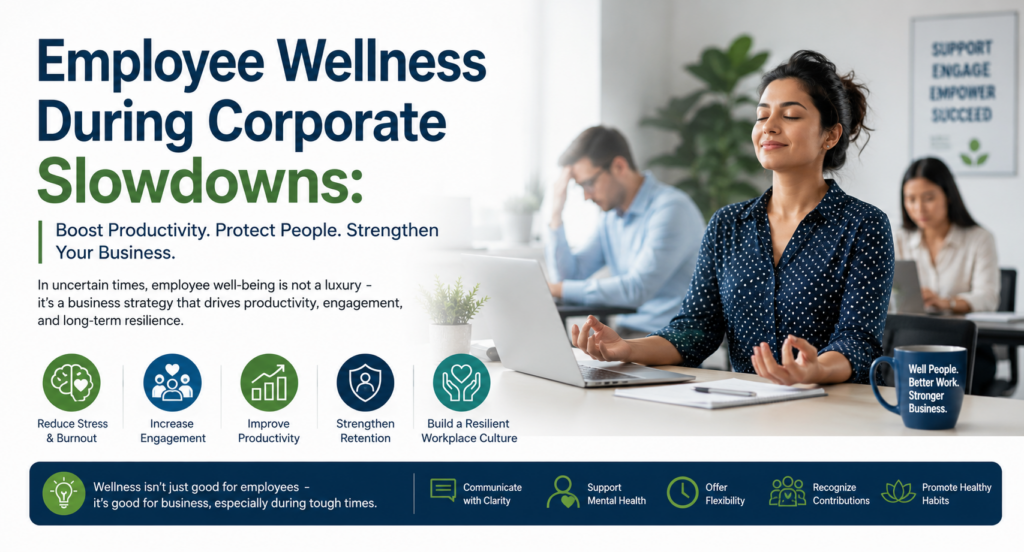 A slowdown can create increased stress, uncertainty, burnout, and disengagement among employees. If organizations ignore these challenges, productivity frequently declines further through absenteeism, presenteeism, low morale, turnover, and reduced collaboration.
How Corporate Slowdowns Affect Employees
Common employee challenges during economic uncertainty include:
- Increased anxiety about job security
- Higher workloads due to hiring freezes or layoffs
- Burnout from prolonged stress
- Reduced motivation and engagement
- Mental fatigue and decision exhaustion
- Increased conflict and communication breakdowns
- Greater risk of health issues and absenteeism
These factors directly impact organizational performance.
Why Employee Wellness Matters More During Slowdowns
Wellness programs are often viewed as optional perks during difficult financial periods. In reality, strategic wellness initiatives can help stabilize productivity and reduce hidden business costs.
Key benefits include:
- Reduced Presenteeism
Employees who are stressed, exhausted, or mentally distracted may still show up to work but perform below capacity. Supporting mental and physical well-being helps employees remain focused and productive.
- Higher Employee Engagement
When employees feel supported during uncertain times, trust and loyalty increase. Engaged employees are more likely to:
- Stay productive
- Collaborate effectively
- Support organizational goals
- Maintain customer service quality
- Lower Absenteeism
Stress-related illnesses, fatigue, and burnout often increase during economic pressure. Wellness initiatives that promote sleep, stress management, nutrition, and preventive care can reduce sick leave and downtime.
- Improved Retention
Replacing experienced employees is expensive. Organizations that continue investing in employee well-being during downturns often retain key talent more effectively.
- Stronger Organizational Culture
Wellness initiatives communicate that leadership values employees beyond short-term financial metrics. This helps preserve morale and workplace culture during difficult transitions.
Wellness Strategies That Support Productivity During Slowdowns
Organizations do not necessarily need expensive programs. Practical, targeted strategies often create the greatest impact.
Mental Health Support
- Employee Assistance Programs (EAPs)
- Stress management workshops
- Manager training on burnout recognition
- Access to counseling or coaching
Flexible Work Support
- Flexible schedules
- Hybrid work options
- Reduced meeting overload
- Focus-time policies
Leadership Communication
Transparent communication reduces uncertainty and rumor-driven anxiety.
Leaders should:
- Share updates regularly
- Acknowledge challenges honestly
- Reinforce organizational direction
- Recognize employee contributions
Low-Cost Wellness Initiatives
- Walking challenges
- Mindfulness sessions
- Wellness newsletters
- Team connection activities
- Recognition programs
Manager Support Training
Managers strongly influence employee well-being. Training supervisors to recognize stress and support workloads can significantly improve team productivity.
The Productivity Connection
Research consistently shows that healthier employees are more productive, resilient, and engaged. During corporate slowdowns, the organizations that maintain workforce well-being are often better positioned to recover faster when business conditions improve.
Employee wellness should not be viewed as a luxury during difficult periods. It is a business strategy that helps organizations:
- Protect productivity
- Reduce hidden costs
- Maintain morale
- Improve retention
- Strengthen long-term organizational performance
Conclusion
Corporate slowdowns place enormous pressure on both employers and employees. Organizations that prioritize employee wellness during these periods often experience stronger productivity, higher engagement, and greater workforce resilience.
Rather than eliminating wellness efforts during economic uncertainty, companies can adapt them into practical, cost-effective strategies that support both employee health and business outcomes.