How short, intentional movement breaks can improve employee health, reduce sedentary time, and help organizations build a more active, energized, and productive workforce.
Introduction: Rethinking What Counts as Exercise
For many employees, finding time for exercise feels like another responsibility competing for attention. Between meetings, deadlines, family commitments, and daily demands, even a 30-minute workout can seem difficult to fit into an already crowded schedule.
But what if meaningful health benefits did not always require a gym membership, workout clothes, or a dedicated exercise session?
That is the idea behind exercise snacks, a growing approach to physical activity that emphasizes short bursts of movement throughout the day.
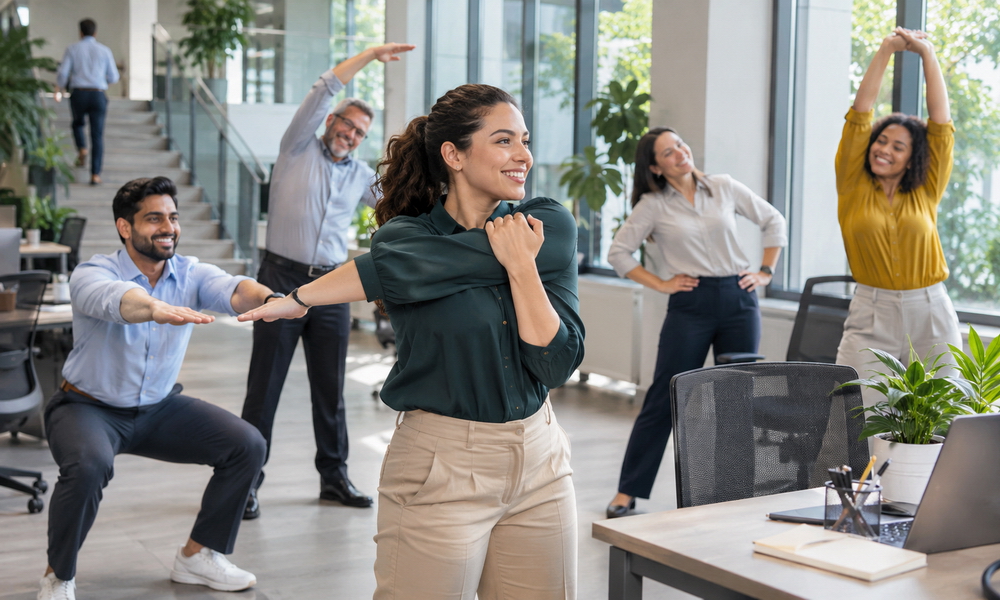
An exercise snack might involve climbing stairs for one minute, taking a brisk walk between meetings, performing several chair squats, or doing a quick series of movements beside a desk. These activities may last only 30 seconds to five minutes, yet research suggests that brief, repeated bouts of physical activity can contribute to better cardiovascular health, physical fitness, and metabolic function.
For employers, the concept offers an opportunity to rethink workplace wellness.
Instead of relying exclusively on structured fitness challenges or after-hours exercise programs, organizations can help employees incorporate movement naturally into their workday.
The result is a more accessible, inclusive, and potentially sustainable approach to supporting employee well-being.
What Does the Science Say About Exercise Snacks?
The scientific foundation for exercise snacks is increasingly compelling, particularly for people who spend much of their day sitting.
The World Health Organization (WHO) recommends that adults accumulate 150 to 300 minutes of moderate-intensity aerobic activity weekly, or 75 to 150 minutes of vigorous activity. Importantly, its updated guidelines recognize that physical activity of any duration counts toward these recommendations.
Several studies illustrate why this matters.
7% Fitness improvement:
A 2024 randomized controlled trial involving 42 inactive young adults found that six weeks of brief, vigorous stair-climbing exercise snacks improved peak oxygen uptake, a measure of cardiovascular fitness, by approximately 7%. The findings suggest that short activity sessions can produce measurable physiological improvements.
44% Lower mortality risk association:
A 2026 U.S. cohort study involving 3,293 adults who reported no structured exercise found that approximately 5.3 brief bouts of vigorous lifestyle activity daily were associated with a 44% lower risk of all-cause mortality compared with no such bouts. This was an observational association, not proof of causation.
These findings are encouraging, but they require careful interpretation. Exercise snacks are not a guaranteed substitute for comprehensive physical activity programs. Research continues to examine their long-term effects, and the strongest results often involve vigorous activity rather than gentle stretching alone.
Nevertheless, the evidence supports a practical message: small amounts of movement are worthwhile, and consistency matters.
Why Exercise Snacks Make Sense in Today’s Workplace
Modern workplaces frequently encourage prolonged sitting, even when organizations actively promote employee wellness.
An employee might begin the day answering emails, attend three consecutive virtual meetings, work through lunch, and finish with several hours of concentrated computer work.
By late afternoon, opportunities for movement may have been limited to walking between rooms or getting coffee.
Exercise snacks offer an alternative to this pattern by making physical activity part of the workday rather than an additional obligation.
Potential workplace benefits include:
- Reduced sedentary time: Regular movement breaks interrupt extended periods of sitting.
- Improved physical fitness: Appropriately challenging, repeated activity can help improve cardiovascular capacity.
- Greater accessibility: Short activities require little equipment, space, or financial investment.
- Mental refreshment: Movement breaks may provide opportunities to reset attention and manage feelings of fatigue.
- Healthier workplace norms: Visible support for movement can reinforce an organizational culture that values employee well-being.
For HR leaders, one important advantage is that exercise snacks address a common barrier to wellness participation: lack of time.
Rather than expecting employees to reorganize their schedules around exercise, organizations can redesign everyday routines to create opportunities for movement.
Practical Exercise Snacks Employees Can Try
These examples can be adapted to different abilities, work environments, and fitness levels.
- Stair-climbing breaks (1-2 minutes): Walk briskly up one or two flights of stairs, adjusting the pace to individual fitness and safety needs.
- Desk-side strength movements (2-3 minutes): Perform controlled chair squats, standing calf raises, or wall push-ups to engage major muscle groups.
- Brisk walking breaks (3-5 minutes): Walk through a hallway, around the building, or outdoors between meetings.
- Mobility and stretching (1-3 minutes): Try shoulder rolls, gentle torso rotations, or seated mobility movements to break up static postures.
Not every movement break qualifies as a vigorous exercise snack. Gentle movements can still interrupt sitting, while more challenging activities may provide greater cardiovascular training benefits.
Employees with health conditions, mobility limitations, or safety concerns should choose appropriate activities and seek professional guidance when necessary.
From Individual Habit to Organizational Wellness Strategy
The greatest opportunity for employers is not simply encouraging employees to move more. It is creating workplace conditions that make movement easy, acceptable, and sustainable.
A 2024 workplace study examined employees’ receptivity to brief stair-climbing exercise snacks compared with a more structured high-intensity interval training approach. The research demonstrated the value of investigating how time-efficient exercise can fit into real workplace settings.
Organizations can translate this concept into action through several strategies.
- Normalize Movement During the Workday:
Leaders can encourage employees to take brief activity breaks without feeling that stepping away from their desks signals reduced productivity.
Managers might introduce optional movement pauses between meetings, encourage walking conversations, or build five-minute transition periods into schedules.
Leadership participation is especially valuable because employees often follow the behaviors their managers model.
- Design Movement-Friendly Environments:
Workplace design can influence activity habits.
Organizations can promote accessible stairways, establish safe walking routes, provide adjustable workstations, and identify suitable spaces for brief movement sessions.
For remote employees, digital reminders and short guided movement resources can offer similar support.
The objective is to remove barriers rather than introduce another complicated wellness initiative.
- Make Participation Inclusive:
A successful movement strategy should recognize that employees have different physical abilities, job responsibilities, and working conditions.
Office workers may benefit from walking breaks, while manufacturing employees might need carefully scheduled activities that account for physical workload and safety requirements.
Seated movements and low-impact alternatives should be available for employees who cannot comfortably stand, climb stairs, or perform vigorous activity.
Participation should remain voluntary, supportive, and free from competition or judgment.
Measuring Success Beyond Participation Rates:
Like any workplace wellness initiative, exercise snacks should be evaluated using meaningful outcomes.
Counting how many employees participate provides useful information, but participation alone does not demonstrate improved health or organizational performance.
A practical evaluation framework might include:
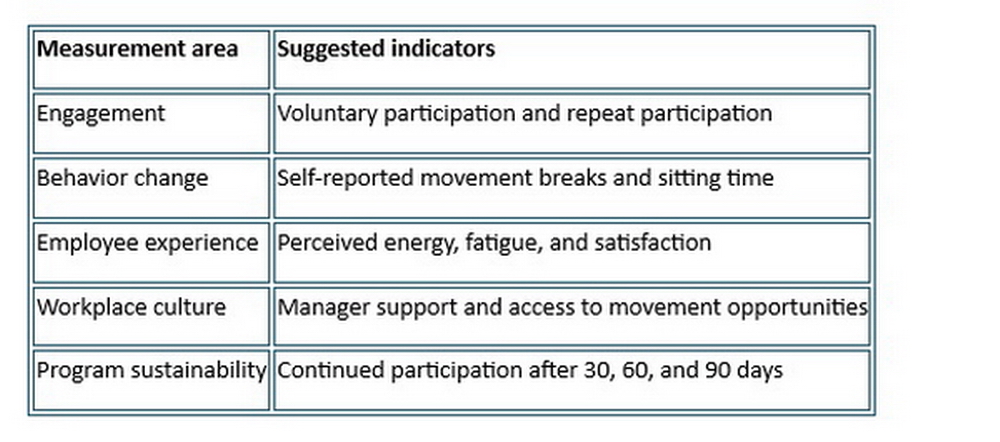
Organizations can begin with a simple baseline survey and repeat it after an eight- to twelve-week pilot.
For example, an employer could introduce optional three-minute movement breaks twice daily within one department. Employees could report whether they are taking more frequent breaks, experiencing fewer prolonged sitting periods, or finding the activities practical.
Results can guide adjustments before expanding the initiative.
Importantly, employee health information should remain confidential, and individual activity tracking should not become a performance-management tool.
Building a Culture Where Small Actions Matter
One of the most valuable aspects of exercise snacks is their potential to make workplace wellness feel achievable.
Employees do not need to become athletes to benefit from movement. Organizations do not need expensive facilities to encourage healthier routines.
What they need is an environment that supports realistic behavior change.
A workplace that encourages employees to move between meetings, take short walking breaks, and interrupt prolonged sitting communicates an important message: employee health deserves attention throughout the workday.
However, exercise snacks should complement broader wellness strategies, including ergonomic design, adequate rest, manageable workloads, and opportunities for regular physical activity.
They should never be used as a substitute for addressing unhealthy working conditions.
Conclusion: Small Movements, Meaningful Change
Exercise snacks challenge the assumption that physical activity must be lengthy, structured, or inconvenient to provide value.
For organizations, their appeal lies in simplicity. Short movement breaks can be introduced with minimal cost, adapted across different work environments, and incorporated into existing wellness initiatives.
The most effective starting point is a modest, measurable pilot: invite employees to take two or three brief movement breaks each day, provide accessible activity options, encourage manager participation, and evaluate employee feedback after several weeks.
From there, organizations can refine their approach based on participation, employee experience, and demonstrated behavior change.
The goal is not to turn every workday into a workout. It is to create a workplace where movement becomes a natural, supported part of everyday life.
When small, healthy actions become consistent organizational habits, they can contribute to a stronger foundation for long-term employee well-being.
References:
- WHO Guidelines on Physical Activity and Sedentary Behavior
- Exercise in the Workplace: Examining the Receptivity of Practical and Time-Efficient Stair-Climbing “Exercise Snacks.”
- Do Stair Climbing Exercise “Snacks” Improve Cardiorespiratory Fitness? Applied Physiology, Nutrition, and Metabolism
- Association of Wearable Device-Measured Vigorous Intermittent Lifestyle Physical Activity With Mortality